Iron & Ink: Why Paper Gym Workout Logs Outperform Fitness Apps
Why unlocking a smartphone between sets sabotages muscular intensity, and how tactile physical workout logs make progressive overload undeniable.
Enter any commercial weight room today and observe the landscape. Between sets of barbell squats or bench presses, lifters remain hunched over glowing smartphone screens. What begins as a routine logging of three sets of eight repetitions invariably deteriorates into checking email dispatches, scrolling algorithmic feeds, and losing all mental focus during the vital restorative rest window.
The Smartphone Distraction Epidemic in Strength Training
Physical hypertrophy and neural strength adaptation demand intense central nervous system focus. When your rest intervals are polluted by digital cognitive stimulation, your heart rate variability becomes erratic, set transitions stretch from ninety seconds to four sluggish minutes, and the muscular mind-muscle connection is compromised.
Replacing your phone with a printable gym workout log PDF permanently severs this digital leakage. When you carry a physical clipboard or pocket log into the gym, your environment narrows to two fundamental elements: the knurled barbell and the white paper before you.
✦ Your phone is engineered to hijack your attention; your physical gym log is engineered exclusively to record your strength.
The Mechanical Mandate of Progressive Overload
Muscular adaptation obeys an unyielding biological law: progressive overload. If you lift identical loads for identical repetitions month after month, your musculoskeletal architecture has no evolutionary reason to adapt. To grow, you must systematically increase mechanical tension over time.
An effective strength training tracker must make this progression instantly legible. Looking at a screen forces you to tap through multiple menus or watch advertisements; glancing at a physical progressive overload log sheet places your performance from seven days ago directly under your eyes as an indisputable benchmark to surpass.
The 3-Page Push, Pull, Legs Architectural Framework
- Push Day Registry: Overhead presses, incline bench variations, and tricep extensions tracked by target load, completed reps, and perceived rate of exertion (RPE).
- Pull Day Matrix: Deadlifts, weighted pull-ups, and horizontal rows logged alongside grip adjustments and latissimus engagement cues.
- Leg Day Dossier: Squat depths, posterior chain mechanics, and calf volume organized with calibrated margin notes for tempo and warmup progressions.
Kinetic Accountability: The Ink on Paper Effect
There is a raw visceral satisfaction in uncapping a heavy pen and striking out a target after completing an exhausting set. Writing the numbers "100 kg × 5 reps" by hand binds your nervous system to the accomplishment. It transforms abstract gym metrics into tangible, ink-stained archival history.
The Archival Perspective
Silence the digital noise at the weight rack. Step onto the platform equipped with iron discipline, clear targets, and an archival training ledger.
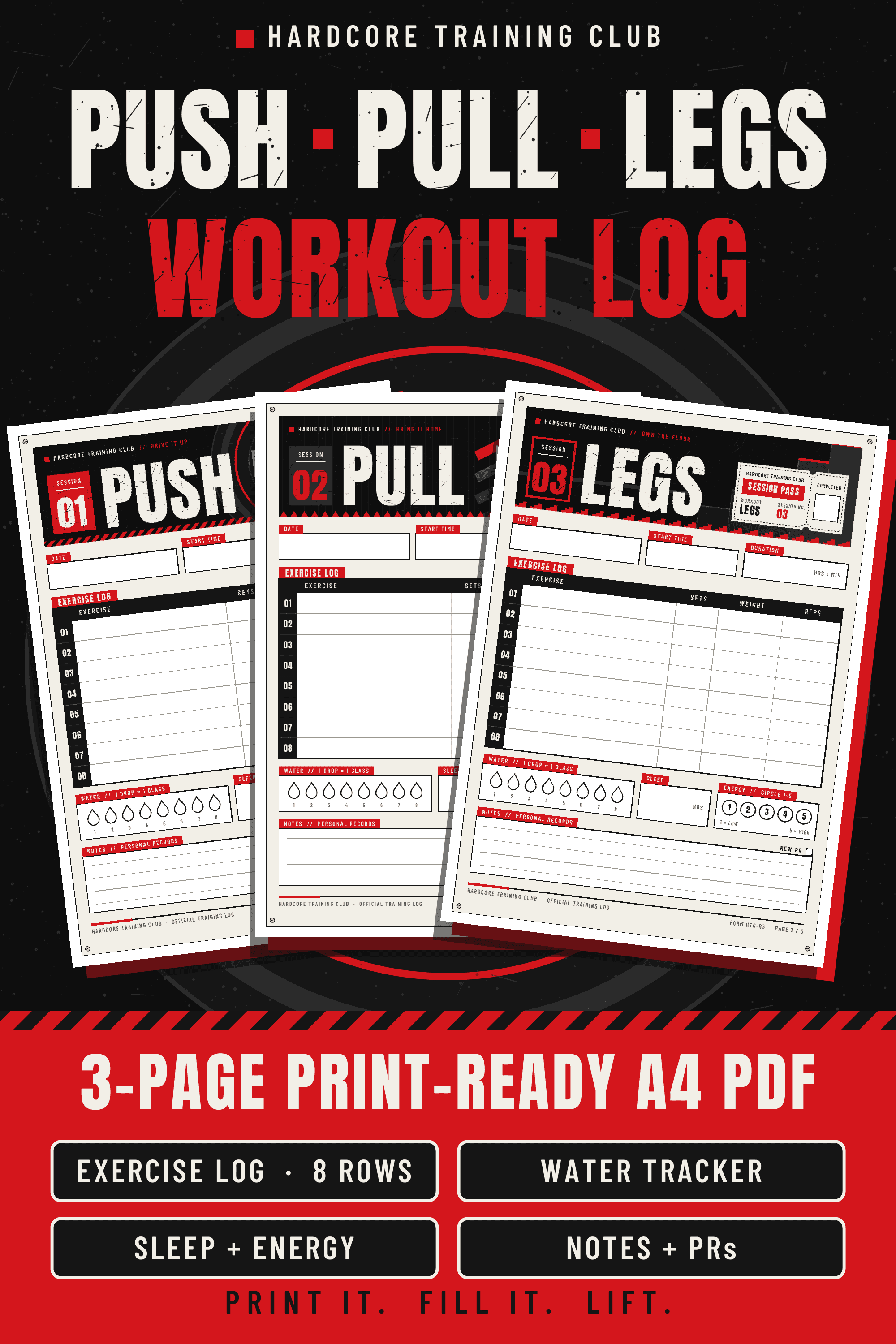
Push Pull Legs Workout Log Printable | Gym Tracker PDF (A4, 3 Pages)
A dedicated 3-page Push/Pull/Legs training architecture engineered for progressive overload tracking, set volume recording, and distraction-free gym sessions.